
When you incorporate natural patterns into the design of your home, you’re doing more than decorating. You’re tapping into one of nature’s most universal design moves: fractal patterns. You can see them in the swirl of a shell, the branching of a houseplant, or the shifting shadows of sunlight through a curtain. But what are fractals; why do they form; and what makes them so visually appealing to us?

What are Fractals?
Fractals are patterns that repeat at different sizes and scales. In nature, a single tree branch looks like a smaller version of the tree itself, and a fern’s leaflet mirrors the entire frond. Even coastlines keep a jagged, irregular rhythm, whether you’re standing at the water’s edge or tracing the shoreline from above. Scientists call this “self-similarity,” and it’s one of nature’s most distinctive fingerprints.
The Science of Fractals: Nature’s Algorithm
The mathematician Benoît Mandelbrot coined the word “fractal” in the 1970s to describe these rough, but repeating forms. In his classic The Fractal Geometry of Nature, he showed how simple rules could generate infinite complexity. Mandelbrot pointed out what we already sensed: the world isn’t made of neat and tidy circles and triangles—it’s made of rough edges, branching veins and endless repetition.
His famous line still rings true:
“Clouds are not spheres, mountains are not cones, coastlines are not circles, and bark is not smooth, nor does lightning travel in a straight line.”
Once you start noticing, you realize he was right — Mandelbrot reminded us that the world isn’t a geometry textbook. It’s made of jagged coastlines, ferns that mirror themselves and patterns that repeat no matter the scale.

 Deeper Dive: Fractal Patterns
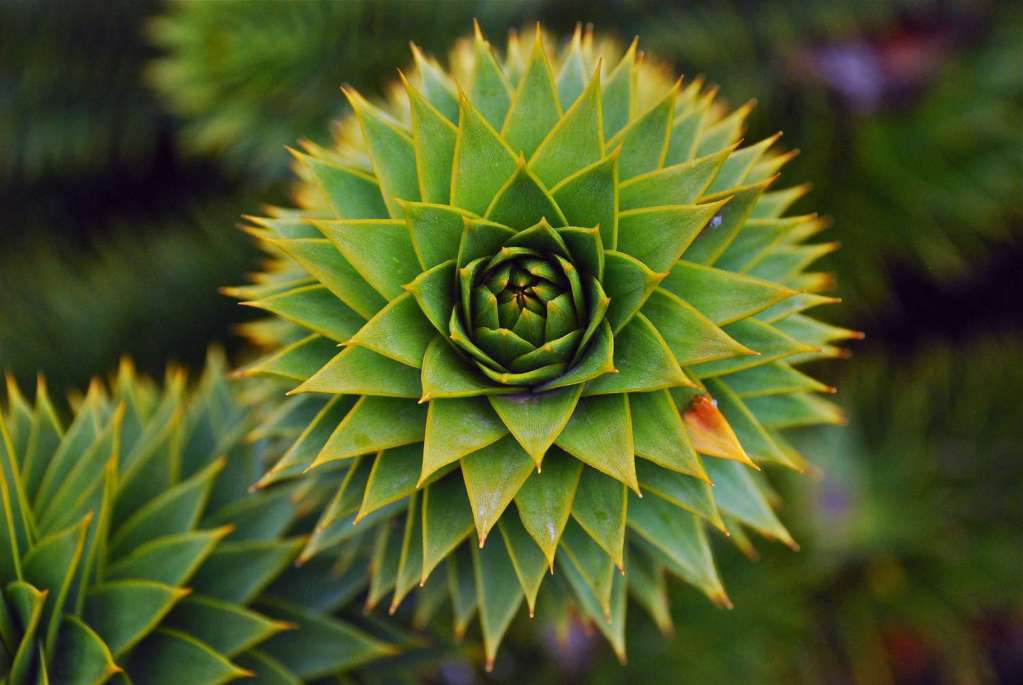
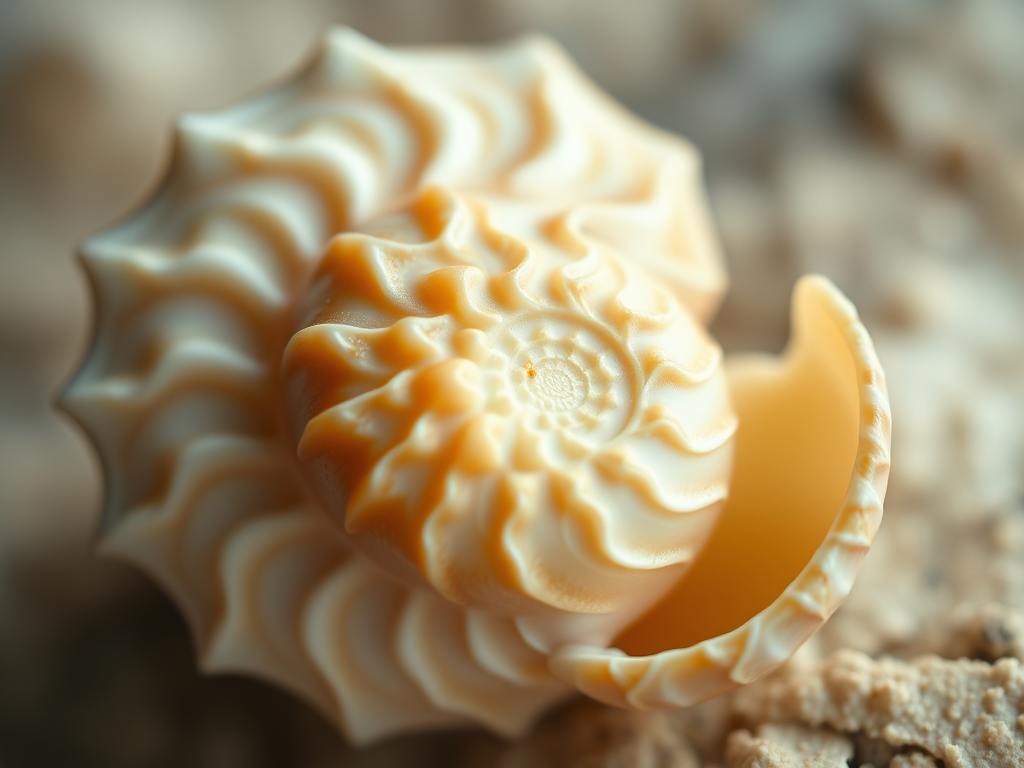
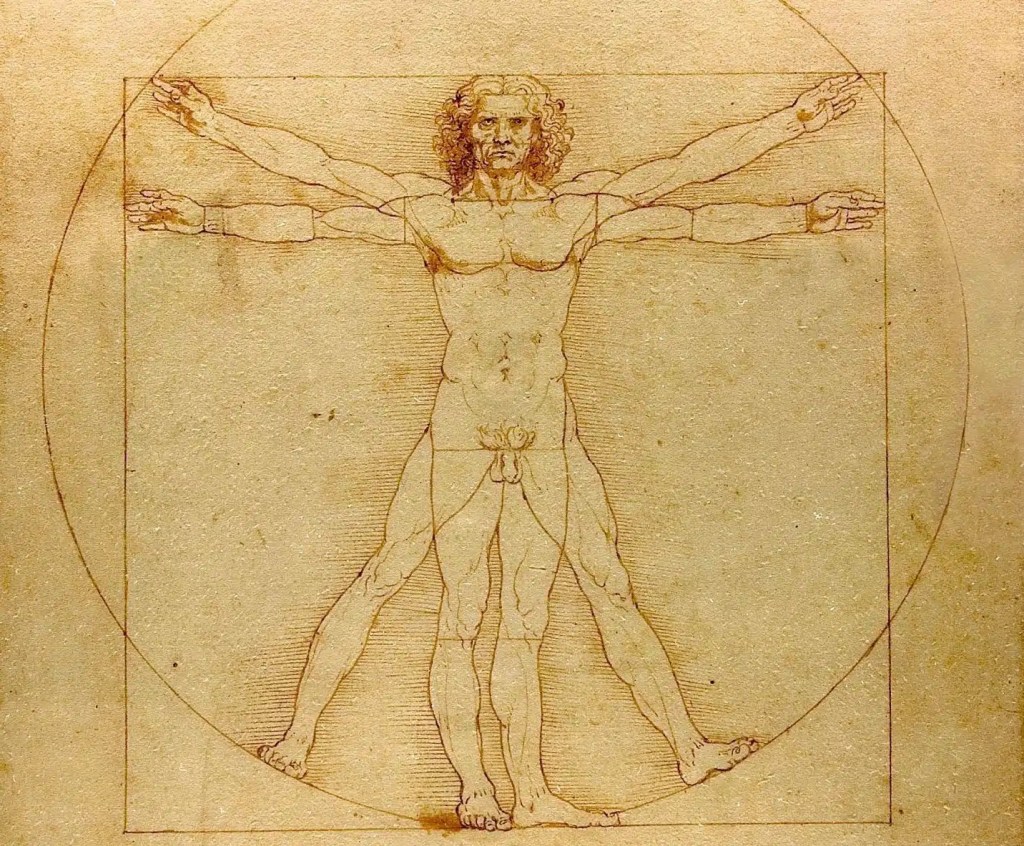
Fractals are also tied to mathematical proportions like the Fibonacci sequence and the golden ratio (about 1.618). You’ll find these spirals in pinecones, shells, and sunflowers. For centuries, artists and architects have borrowed them because they strike a balance that feels “just right” to the human eye.

Balance of Symmetry and Asymmetry
Fractals strike a delicate balance. A fern looks asymmetrical at first glance, but inside it contains layers of smaller spirals and repeating shapes. This blend of order and surprise is what makes natural patterns feel alive instead of mechanical — and those “living” qualities resonate with us at a deep, visceral level.
Research confirms what we sense intuitively: people prefer patterns with moderate complexity. A blank wall is too plain, and a busy, chaotic surface feels overwhelming. But fractals sit right in the middle — rich enough to hold our attention, simple enough to put our brains at ease.
And Fractals aren’t just visual. Music works the same way—simple patterns repeating, building, repeating and branching until a bigger shape emerges. That rhythm of repetition is part of why fractals feel so natural to us.”
Why We’re Drawn to Fractals

Two ideas help explain why fractals feel so natural, almost necessary, to us.
The first is biophilia. Biologist Edward O. Wilson described it as our innate urge to connect with the living world. Fractals, woven through every part of nature, fit perfectly into that instinct. Their presence feels soothing because we’re already wired to respond to them.
“Nature holds the key to our aesthetic, intellectual, cognitive and even spiritual satisfaction.” –Edward O. Wilson
The second idea is what physicist Richard Taylor from the University of Oregon calls fractal fluency. Our brains process fractals almost effortlessly. Patterns that fall into a certain range — around 1.3 to 1.5 on the fractal dimension scale — align with the visual pathways we came to recognize in trees, rivers and clouds. Looking at them doesn’t tax our brains; it restores them. The result is less stress and sharper focus.
The Numbers Explained
When it comes to those numbers, think of fractal dimension the way you’d think of the Scoville scale for peppers. A bell pepper sits at zero, a jalapeño in the thousands, and a Carolina Reaper shoots up into the millions. The numbers don’t mean much on their own — they’re simply useful because they compare intensity. Fractal dimension numbers work the same way. A straight line is at one, a completely filled surface is at two, and most natural fractals fall somewhere in between, say 1.3 or 1.5. The higher the number, the rougher and more complex the pattern, just as the higher the Scoville rating, the hotter the pepper.
How Fractals Affect Us
Science shows fractals are more than eye candy, they shape how we feel.
Studies reveal that viewing fractal-rich scenery like trees, leaves, or coastlines can reduce stress by as much as 60 percent. Because our brains are fluent in fractals, we don’t have to work hard to process them. That mental ease translates into calm. Eye-tracking experiments even show that our gaze naturally follows fractal paths, syncing our rhythms with the patterns in front of us. That resonance literally lowers blood pressure and heart rate.
“I lead an interdisciplinary research network … the experiments … indicate that people are ‘hard-wired’ to respond to a specific form of fractal found in nature, one that reduces stress levels by up to 60%.” — Richard Taylor, University of Oregon
For some, this harmony points to adaptation. For others, myself included, it suggests something deeper: that we’re wired this way by design. Fractals don’t just calm us, they remind us that beauty has an author, and science and discovery is simply peeling back another layer of His creation.
And while I could nerd out for hours diving deeper into the science, let’s shift our focus to the heart of this blog: how to bring these soothing patterns into our homes.
Calming Your Living Space with Fractal Patterns
So how do you translate nature’s mysterious hidden geometry into your living space? The secret is to layer fractals through different senses — what you see, what you hear, and even what you touch. It’s not about copying nature literally, but about echoing its rhythms so your home feels alive. Whether it’s those branching grain lines in a wooden table, the shifting play of dappled light through a window pane, or the gentle sound of flowing water… even the texture of fabrics with wave-like patterns carries a piece of that repeating order. Together, they create an environment that doesn’t just look natural, it resonates with the same patterns your brain has been tuned to for calm and balance. Let’s explore some examples…
Materials & Textures

Wood, stone and fabric carry fractal detail naturally. The grain of wood shows repeating rings of growth and the swirls of nature’s influence on the pattern in the grain. Marble and granite reveal ancient crystalline networks frozen in stone. And even fabrics with leafy or wave-like patterns add rhythm and softness, turning surfaces into subtle echoes of the outdoors.
As architect Nikos Salingaros notes,
“Fractals create visual interest and comfort, because they combine complexity with familiarity. Buildings that echo these natural forms feel alive rather than sterile.”
Plants: Living Fractals

If you want fractals in the purest form, bring in plants. A fern’s frond is made of smaller fronds, each echoing the whole. Succulents like echeveria spiral outward in golden-ratio rosettes. Herbs such as parsley or cilantro branch into mini versions of themselves. Even Romanesco broccoli looks like nature’s geometry sculpted in 3D.
“The human mind is predisposed to resonate with living structures and forms.” — Edward O. Wilson
Miniature trees — bonsai or dwarf citrus — offer the branching geometry of forests in compact form. Surrounding yourself with plants isn’t just about greenery; it’s about filling your space with a living fractal mind massage. They repeat their shapes at different scales, tuning your home to the same rhythms that run through rivers, coastlines and clouds.
Plants, in all their fractal beauty, make that connection tangible.

Light & Shadow
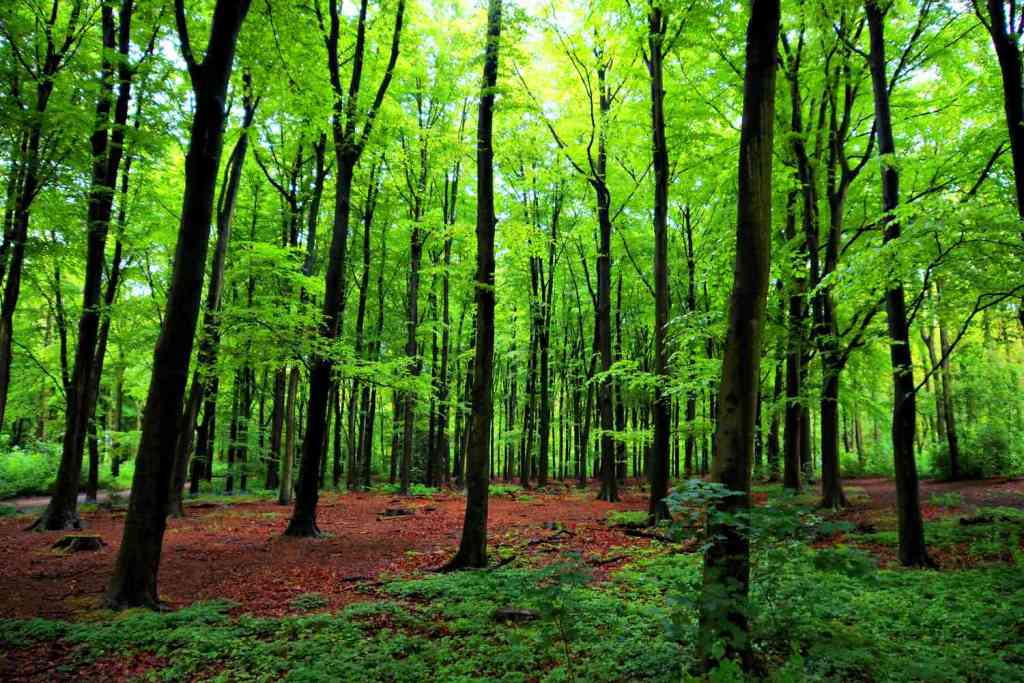
Light is one of the simplest ways to add fractals indoors. Step into a forest and notice how sunlight filters through leaves — scattering into branching shadows that move and change with the day. Indoors, you can recreate that with layered lighting. A cluster of pendant lamps or a lattice shade can cast overlapping patterns that feel both intricate and calming. Even candlelight flickering against a wall creates a fractal-like dance of repetition and variation.
Taylor’s research confirms it:
“Our visual system is tuned to fractal patterns. When we experience them — even in shifting light or shadow — our stress levels drop by as much as 60 percent.”
Soundscapes
Fractals aren’t only visual. Flowing water creates sound with random, yet repeating rhythms scientists call 1/f noise. That’s why fountains or bubbling streams feel so soothing — the sound carries the same fractal resonance as leaves or coastlines. And as I mentioned, certain kinds of music work the same way: classical compositions and ambient tracks often build repeating layers that echo fractal depth.

“Exposure to the fractal richness of nature — whether visual or auditory — quiets the brain’s overworked circuits and opens space for reflection.” — Psychologist Ruth Ann Atchley
Conclusion
So, by now, you may begin to sense that there is much more to fractals that meets the eyes and ears — they’re one of nature’s universal signatures. Whether in a seashell’s elegant spiral, a tree repeating itself as it branches upward and outward, or even in the sunrays and shadows cast across your floor, fractals bring balance to that delicate dance of nature’s gifts with a steady, calming rhythm.
By weaving these patterns into your home — through light, texture, sound and living plants — you create spaces that don’t just look beautiful, but just feel right. You can transform your home into a space that invites rest, sparks wonder, and reminds you that you are part of a larger design — one written in the mysterious language of self-repeating patterns.

Discover more from NaturAbode
Subscribe to get the latest posts sent to your email.

 Deeper Dive: Those Mysterious Aspen Groves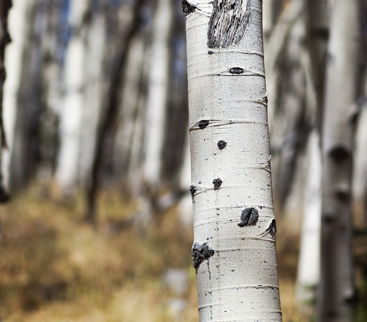



I loved this article! Thank you for these insights 🙏🏼
Thanks, Crysten! Much love to you all!