Deeper Dive: Those Mysterious Aspen Groves
Aspen groves feel different the moment you step into them. Trunks rise close together, separate yet somehow unified. That feeling isn’t imagined. It’s biological.

What we call an “aspen grove” is often not a collection of individual trees at all, but a single living organism expressed many times over. Each trunk grows from the same underground root system, sharing the same genetic identity. Above ground, it looks like a forest. Below ground, it behaves like one body.
The most famous example is called Pando, located in Fishlake National Forest in Utah. Covering more than 100 acres and consisting of tens of thousands of stems, Pando is considered one of the largest living organisms on Earth by mass. While individual trunks live about a century, the root system beneath them may be thousands of years old.
Aspen colonies stretch throughout the Rocky Mountains, across Colorado, Utah, Wyoming, and into Canada, as well as parts of Europe and Asia. Wherever conditions are right, aspens spread not as much by seed, but by extension, quietly sending new life outward through the soil.
Aspen groves are less like a crowd and more like a single conversation spoken in many voices. No single trunk is essential, yet the whole endures.
That may be why aspens feel both fragile and resilient at once. What falls above ground is replaced. What matters most remains unseen, steady, and shared.
Deeper Dive: If These Trees Could Talk: Nature’s NetworkingFor a long time, the idea that trees could “talk” to one another sounded poetic — even mystical. But over the past few decades, science has shown something remarkable: Trees do communicate. Not with words or sound — but with chemistry, electricity, and shared underground networks.
And it turns out, forests behave less like collections of individuals and far more like integrated, cohesive communities.
Here’s how:
Most trees are connected underground by mycorrhizal fungi — thin, threadlike structures that bind roots together across vast distances.

These fungi form what scientists often call the “Wood Wide Web.” And through this network, trees can:
This isn’t metaphor. It’s measurable biology.
“The forest is wired together. Trees can communicate and interact with one another through these underground networks.”
— Suzanne Simard, Professor of Forest Ecology at the University of British Columbia
There are three main ways trees communicate:
When a tree is attacked by insects, it can release chemical signals through its leaves or roots. Nearby trees detect these signals and begin producing defensive compounds before they’re attacked.
In plain terms: one tree’s problem becomes an early warning for everybody.
“Plants can sense their neighbors and adjust their behavior accordingly.”
— Richard Karban, Distinguished Professor Emeritus at the University of California, Davis
Older, well-established trees — sometimes called “mother trees” — often send carbon and nutrients to younger seedlings growing in shade. This helps the forest regenerate as a whole.

This kind of cooperation challenges the old idea that nature is only about competition. Maybe “survival of the fittest” doesn’t tell the whole story.
3. Electrical and Hormonal Signals
Roots and fungal networks can transmit electrical impulses and hormone-like compounds, allowing rapid responses across the forest floor.
It’s not “thought” in our construct — but it is coordination.
“Plants are sensitive organisms that continuously process information from their environment.”
— Stefano Mancuso, Professor of Arboriculture and Plant Biology at the University of Florence
Scientists are careful not to say trees “think” the way humans do. But they sense, respond, and adapt — constantly. The forest functions more like a living system than a battlefield.
Deeper Dive: The Nervous System’s Response to Beauty
Before you notice whether a space is beautiful, your nervous system has already decided whether it makes sense.
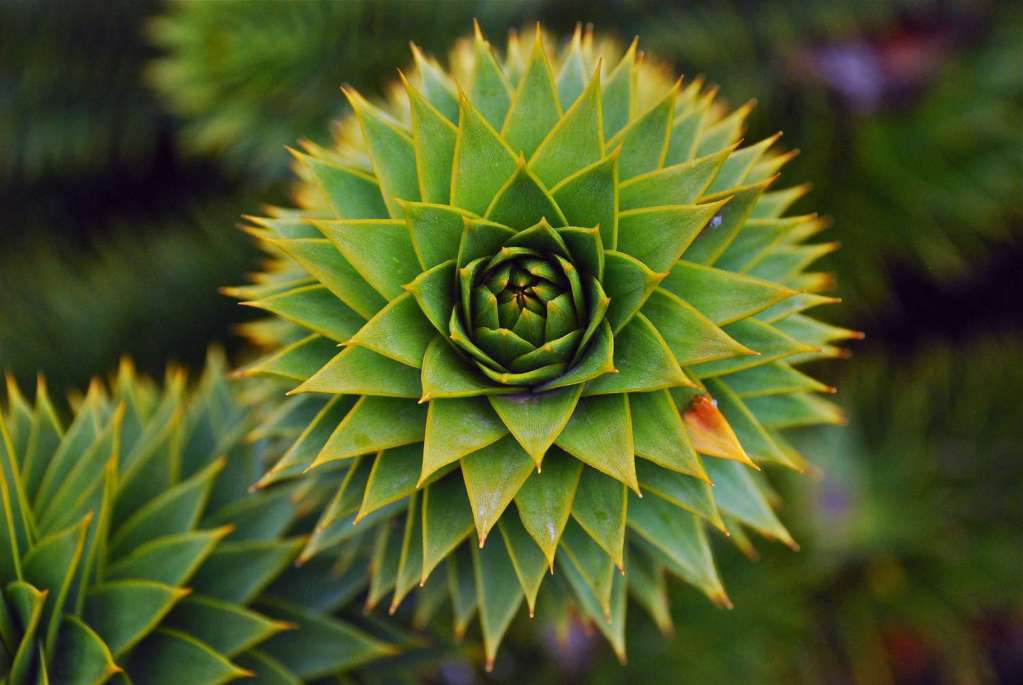
Environmental psychologist Judith Heerwagen has shown that humans are biologically attuned to environments that are easy to interpret. When spaces lack coherence — when elements compete, collide, or feel unrelated — the brain must work harder to process them.
This happens automatically. Long before conscious thought, the brain and body scan an environment for cohesion — signs that the space is organized, legible, and meaningful. These instincts by design were useful in natural settings where survival depended on quickly reading patterns: where paths led, where shelter existed, and whether the environment felt predictable enough to relax within.
That extra effort often registers as subtle tension rather than conscious dislike.
This idea is closely related to environmental legibility, a concept developed by researchers Rachel Kaplan and Stephen Kaplan. They found that people consistently prefer environments that “make sense” — spaces with clear organization, recognizable patterns, and a balance between order and mystery.
“Preferred environments are those that are coherent and invite exploration without demanding effort.”
— Rachel & Stephen Kaplan
Neuroscience reinforces this. The human brain is a pattern-recognition system. When it encounters environments with repetition, hierarchy, and relationship, stress responses diminish. When those patterns are missing, the nervous system remains quietly alert, increasing cognitive load and fatigue.
Healthcare researcher Roger Ulrich demonstrated that even brief exposure to well-organized natural scenes can measurably reduce stress indicators such as heart rate and muscle tension.
“Visual exposure to natural environments produces rapid stress recovery.”
— Roger Ulrich
This explains why a room can look attractive yet still feel unsettled. Beauty appeals to the conscious mind. Cohesion reassures the body.
Nature succeeds not because it is decorative, but because it is organized. When biophilic design mirrors that underlying structure — clear relationships, rhythmic repetition, and meaningful hierarchy — the nervous system responds first.
Not with admiration, but with relief.
Deeper Dive: Can Interior Spaces Become Thin Places?If thin places are less about geography and more attunement and attentiveness, then it’s worth asking whether interior spaces can carry the same quality. Not in the sense of producing transcendence on demand, but in creating conditions where awareness has space to deepen and presence becomes perceptible.
Celtic Christianity never treated thin places as magical locations. They were places where distraction fell away and the world felt more transparent. That insight translates surprisingly well indoors. Certain rooms quiet us. Others sharpen us. Some spaces feel neutral, while others feel like refuge.
Think of a simple morning moment: light entering low through a window and landing across a wooden table. Nothing dramatic. No magic here. Just light, grain, shadow and stillness. Yet something about it invites pause. Or consider a reading chair tucked near a window, flanked by a living plant and a textured wall — a place that doesn’t ask you to scroll, respond, or perform. It simply holds you openly, quietly with permission to just… be.
Interior thin places emerge out of balance and restraint. They’re cultivated through materials that tell the truth about themselves — wood that looks and feels like wood, stone that carries weight and texture. Through proportion and rhythm that feel ordered rather than busy. Through silence — not the absence of sound, but the absence of demand.
A room doesn’t create a thin place. It makes room for one. It becomes a quiet threshold — where the material world remains fully itself, and yet gently points beyond.
Deeper Dive: When Nature Pulls Us UpwardThere’s a particular way nature speaks that goes beyond calm. It doesn’t just settle the nervous system — it lifts the gaze. A moment of beauty arrives, and instead of turning us inward, it opens us outward and upward at the same time.
Philosophers and theologians have long noticed this. Not as an argument for belief, but as a description of experience. When beauty truly arrests us, it doesn’t ask to be possessed. It asks to be acknowledged. And often, it awakens a strange mixture of gratitude, longing, and humility — a sense that what we’re encountering is both given and greater than us.
Rudolf Otto (1869–1937) was a German theologian, philosopher, and historian of religion. He made no effort to prove God’s existence or promote a particular doctrine. His central question was much simpler: What actually happens to a human being when they encounter something they experience as “holy”?
“The experience of the (transcendent) is not calming in the ordinary sense; it humbles, fascinates, and draws the mind beyond itself.”
— Rudolf Otto, The Idea of the Holy
This upward pull is what many traditions mean by transcendence. Not an escape from the world, but a widening of it. The mountain, the forest, the quiet room filled with morning light — these don’t become less real in moments of transcendence. They become more real. The physical world remains intact, yet suddenly carries depth.
What’s striking is how consistent this experience is across cultures. People don’t just report feeling relaxed in nature; they report feeling intimately heard and seen.
“Late have I loved you, Beauty so ancient and so new… You called, you shouted, and you broke through my deafness.”
— Augustine of Hippo, Confessions
As though the beauty before them is communicating something without words — something that feels ordered, intentional, and meaningful. Not random. Not neutral.
This doesn’t require everyone to agree on the source of that meaning. But it does raise a question worth pondering: Why does beauty so often move us beyond itself? Beyond ourselves?
If nature were merely material, functional biology, we might expect it to satisfy at the level of sensation alone. But again and again, it does more than that. It awakens wonder. And wonder, by its very nature, points beyond what can be fully seen or understood.
In that sense, feeling the weight of a transcendent moment isn’t imposed onto nature by belief. It’s evoked by nature into our experience, and may show up even before we can interpret its meaning. The upward pull is already there. The question is simply whether we pause long enough to notice where it’s leading.
Deeper Dive: Nature and Asymmetry — Why Organic Shapes Feel Better at Christmas
If you look closely, almost nothing in nature is perfectly even. Branches lean. Pinecones spiral. Evergreen boughs drape in their own direction no matter how you place them. We tend to forget this because store-bought holiday décor is built around rigid symmetry — matched pairs, centered bows, identical ornaments spaced like a grid. It’s tidy, but it’s not how the natural world works.
As we talked about in the asymmetry post, nature’s “off-center” balance is what makes it feel alive. Your eye relaxes when it follows a curve instead of a straight line. Your brain stops searching for corrections. Julian Treasure, the sound expert, calls this kind of natural variation “comforting complexity” — predictable enough to feel safe, but varied enough to feel interesting. Visual design works the same way.
That’s why a cedar garland that drapes heavier on one side feels more calming than one trimmed into perfect uniformity. It mimics the forest. It gives your home the same kind of visual rhythm you feel on a trail or under a tree canopy.
Asymmetry in biophilic design isn’t just a style choice—it’s a way to bring nature’s comforting, organic beauty inside. By embracing varied colors, textures, shapes, and sizes, we create spaces that feel alive, balanced, and deeply soothing.
As environmental psychologists point out, humans evolved surrounded by organic forms, not ruler-straight lines. Judith Heerwagen often writes about how “patterned variability” helps support emotional regulation — a scientific way of saying your nervous system actually prefers a little unevenness.
So at Christmas:
Let one side of the wreath spill down farther than the other.
Let your garland dip instead of forming a perfect scallop.
Let the tree have a “good side” and a “wild side.”
Let the oranges hang where they want.
These small choices shift the whole mood. They turn your home into a winter landscape instead of a display. They remind you that beauty rarely shows up in perfect symmetry — it shows up in the places where things lean, stretch, and fall into their own rhythm.
Asymmetry isn’t sloppy. It’s natural grace. And in a season built around meaning, reflection and warmth, that kind of grace is exactly what we’re trying to invite in.
Deeper Dive: The Meaning of the WreathWreaths weren’t always décor. Historically, they were symbols of endurance and transition — a way for people to mark winter’s turning point. In Northern Europe, evergreens were brought indoors because they were the only plants that refused to fade. Shaping them into a circle became a reminder that life continues even when the world outside looks still.
The circular form matters. A circle has no beginning or end, which is why so many cultures used it to represent unity, continuity, and the quiet promise that light will return. Even without knowing the history, you feel that meaning. A green circle hung on a door or wall signals that the season is shifting and we’re moving with it.
When Christians adopted the wreath, the symbolism deepened — it became a gesture of preparation and hope. But even outside religious tradition, a wreath still functions as a pause: a way of acknowledging the darker days and the slow return of light.
Modern, nature-forward wreaths — slightly asymmetrical and loosely arranged — echo the way things grow in the real world. They remind us that beauty doesn’t need to be perfect to be meaningful. A wreath is simply a small, evergreen circle that whispers: this is a turning moment; let it matter.
 How Firelight Shapes Connection — The Psychology of Warmth, Rhythm and Belonging
Anthropologists often point to fire as the first true “home.” Before we developed walls or roofs, early humans gathered around flame for warmth, protection, food, and shared story. That repeated pattern — people encircling light — may have left a deep imprint on our nervous system. Even now, thousands of years later, our bodies respond to firelight with a sense of safety and social ease.
Modern research helps explain why. Warm light sits in the lower end of the Kelvin scale (roughly 2000–3000K), the same spectrum as fire. Studies on circadian biology show that this kind of light tells the brain, “You can start winding down.” That’s why evening light is naturally softer — it cues rest and recovery. The WELL Building Standard* builds on this by recommending lighting that mimics dusk patterns to support sleep cycles, emotional regulation, and overall wellbeing.
But fire’s influence isn’t just biological — it’s also emotional. Warm, flickering light creates a sense of presence. It slows down the mind, narrows attention in a comforting way, and draws people toward each other. Designer Ilse Crawford famously calls this “emotional warmth,” describing how the glow of a candle or fireplace makes a space feel less like a showroom and more like a place meant for human life.
Even without an actual flame, we recreate these cues: amber bulbs, lantern-style fixtures, salt lamps, dimmers, or small clusters of candles. All of them tap into the ancient memory of gathering around a fire — a reminder that home is as much about atmosphere as architecture.
*The International WELL Building Institute (IWBI). It evaluates how buildings support human health across several categories: Light (circadian-friendly lighting); Air (ventilation & air quality); Water Quality, filtration, access, and the psychological effects of water-related features; Thermal comfort; sound and more.
Why Living Systems Restore Us
Plants do something indoors that no other material can: they change, subtly and continuously. A new leaf uncurling, a shift toward the light, a moment of stillness — all of it creates a rhythm the body instinctively responds to. Biophilic design research from Terrapin Bright Green identifies living systems as “the most complete expression of biophilic connection,” because they engage nearly every sense at once. Color, scent, texture, quiet motion — plants offer a slow, steady form of stimulation that the mind reads as life.
NASA’s early controlled-environment studies, including the well-known 1989 Clean Air Study, found that common indoor plants can absorb airborne chemicals like benzene and formaldehyde. Later research clarified that while large numbers of plants are required to purify air at scale, the psychological benefits are significant even at small quantities. Just having greenery in view has been shown to lower heart rate, stabilize attention, and create feelings of calm.
Environmental psychologist Judith Heerwagen explains that humans respond to vegetation “physiologically and emotionally,” noting that plants trigger micro-restorative experiences — brief, effortless moments where the mind resets. This is partly because plants offer prospect (a sense of openness and vitality) and refuge (a sense of shelter and softness), mirroring what biophilic pioneer Stephen Kellert described as the balance between safety and stimulation.
In design, plants soften the harder edges of stone and metal, bring movement to still rooms, and add depth to light and air. They make a space feel tended rather than styled — a home that’s alive, responsive, and quietly rooting for you.
How Airflow Shapes Clarity, Flow and Ease
Air is invisible, but it’s one of the most powerful regulators of how we feel in a space. The WELL Building Institute highlights a clear link between clean, dynamic airflow and improvements in cognition, mood stability and overall vitality. It sounds obvious, but the body notices air quality long before the mind does — a room that feels stuffy or stagnant can raise stress levels even if you’re not consciously aware of it.
Natural airflow works because it introduces micro-variation: slight temperature shifts, subtle scent changes, the movement of a curtain or a leaf. These cues tell the nervous system that the environment is alive and responsive. Psychologists refer to this as environmental affordance — the sense that a space supports your body’s natural rhythms instead of dulling them.
Even small design choices can make a big difference. Windows that crack open allow CO₂ to disperse and fresh air to circulate. Plants don’t just decorate; they actively metabolize air, adding oxygen and moisture. Passive ventilation — like transom windows, cross-breezes, ceiling fans, or open floor plans — keeps air moving in a way that mimics outdoor conditions.
This movement matters. Research on indoor air and cognition shows that better ventilation can improve problem-solving, alertness, and emotional regulation. In other words, when a room can breathe, so can you. Good air design doesn’t call attention to itself — it simply creates space where the mind feels clearer and the body feels at ease.
Why Stone Helps Us Feel Safe — The Science Behind the Senses
Environmental psychologist Judith Heerwagen describes why materials like stone feel so grounding. She considers the possibility that long before we built modern homes, humans relied on caves, rock shelters, and stone walls for protection. Those deep, repeated associations didn’t fade — they became part of our nervous system’s pattern-recognition system. When we encounter stone indoors, we instinctively register it as stable, trustworthy, and enduring.
Stone also offers what Heerwagen calls environmental coherence — a sense that a space has structure, stability and meaning. Its texture, grain, and natural irregularities signal authenticity, too! The brain reads these cues as evidence of a place that will hold up over time. Synthetic materials are uniform by design, but stone carries information: the history of pressure, heat, mineral change and weathering. This “timefulness,” as geologists describe it, creates a subtle psychological anchor.
From a sensory standpoint, stone engages the body in ways that promote calm. The cool temperature against the skin lowers physiological arousal. The weight and density provide a counterbalance to visual overstimulation. Studies on material perception show that textured natural surfaces can reduce cognitive load by giving the mind something steady and predictable to rest on.
In home design, this translates to more than aesthetics. A stone hearth becomes an emotional center of gravity. A slate shower wall feels like stepping into a natural refuge. Even a small stone tray or bowl communicates stability. Stone doesn’t demand attention — it grounds it.
Why Water Restores Us — Roger Ulrich’s Stress Recovery Research
Environmental researcher Roger Ulrich, best known for his groundbreaking work on stress recovery, discovered something remarkably consistent: when people encounter water — even in small, everyday forms — their bodies shift toward calm. Heart rate slows and blood pressure drops. Muscles soften and, emotionally, people move into a more regulated, less reactive state.
Ulrich’s studies showed that water has a unique combination of visual and auditory cues that gently occupy the mind without overwhelming it. The sound of moving water, for example, is what psychologists call a “soft fascination” — something interesting enough to hold our attention, yet gentle enough to let the brain rest. Unlike electronic noise, water’s patterns are irregular and organic. The brain evolved alongside these patterns, so it instinctively recognizes them as safe.
Even tiny gestures of water indoors can recreate this effect. A tabletop fountain, a vessel placed near a window that catches shifting light, an aquarium with slow-moving fish — all provide micro-restorative moments throughout the day. These small sensory nudges are enough to cue the parasympathetic nervous system, the part responsible for rest and recovery.
Ulrich’s work reminds us that water doesn’t have to be dramatic to be effective. It simply needs to be present — something the eyes can follow, the ears can rest against, and the body can recognize as familiar. In that sense, water becomes more than a design feature… it becomes a steadying influence, a small source of ease built right into the room.
Invisible Ecosystems Indoors
NASA’s early Clean Air Study showed how houseplants absorb volatile compounds like benzene and formaldehyde, but newer research goes further. Each plant hosts a miniature ecosystem of microbes that subtly improves indoor microbial diversity — a factor linked to better immune balance and even mood regulation.
Researchers at the University of Oregon found that homes with more plant life tend to harbor healthier microbial communities, closer in composition to those found outdoors. These microbes can interact with our own microbiome, supporting immune resilience and even emotional well-being through what scientists call the gut–brain axis.
It’s not just “air quality.” It’s biology re-entering daily life. When you touch soil, mist leaves, or crush a sprig of mint, you’re participating in a microscopic exchange that keeps both you and the space alive.
Even the simple act of tending — wiping dust from a leaf, pruning, repotting — renews that living dialogue. Plants quietly restore more than oxygen; they reintroduce the invisible networks our bodies evolved alongside.
How Sound Shapes Emotion
Acoustic ecologists have found that nature soundscapes produce measurable effects on the brain’s alpha waves — the same rhythm associated with relaxed alertness and gentle focus. Hospitals and therapy centers now use these sound patterns to help reduce anxiety, lower blood pressure, and even shorten patient recovery times.
It’s the opposite of background noise. Natural sounds carry patterned variation — never repetitive, never harsh — which the brain interprets as trustworthy. They remind the body of safety, signaling that no immediate threat exists.
Silence, by contrast, can feel uneasy; the mind starts to fill the void. Continuous artificial noise — humming appliances, HVAC systems, city traffic — keeps the nervous system on alert. But the soft randomness of nature sounds — the rustle of leaves, a bird call, distant rain — tells the subconscious that all is well.
Even brief daily exposure helps. Playing natural soundscapes while you read, cook, or work can lower cortisol and improve focus without you realizing it. Your breathing slows, your shoulders drop, and you feel yourself settle — not because you’ve escaped somewhere, but because your home has begun to sound like life itself.
Circadian Light and Mood
Our bodies run on light. Morning sunlight signals the brain to raise cortisol and wake up; evening light triggers melatonin and rest. It’s a rhythm older than civilization — one that guided humans long before clocks or lamps ever existed.
Artificial lighting can easily disrupt that natural pattern, which is why homes that mimic circadian rhythms, following natural light rhythms — brighter, cooler light in the morning and softer, warmer light at night — help stabilize sleep, focus and emotional balance.
Even indirect sunlight reflected off pale walls is enough to cue serotonin production, lifting energy and focus. It’s subtle, but after a few days, you notice: you sleep deeper, wake clearer, and your home starts syncing with the day’s natural rhythm.
To encourage that balance, keep mornings bright and open: raise blinds, let light hit your eyes within the first hour of waking. In the evening, soften it — use lamps instead of overheads, and warm bulbs with amber or golden hues. Your lighting doesn’t just set mood — it keeps your body in tune with time itself.
The Science of Touch
Texture does more than please the eye — it talks directly to the body. Studies in somatosensory design show that irregular, natural surfaces (like wood grain, stone, clay, or linen weave) create subtle variations in touch that the nervous system interprets as safe and familiar. Synthetic textures, by contrast, often register as “too perfect,” offering no sensory depth for the brain to process.
That’s why running your hand across weathered wood or slipping onto a linen sofa can make you sigh without knowing why. The body recognizes the organic irregularity — and relaxes.
Designers who study tactile response note that materials with slight variation stimulate the parasympathetic nervous system, the part responsible for calm and restoration. Even tiny gestures — brushing your hand over a woven blanket or gripping a hand-thrown mug — can trigger that soothing feedback loop.
If you’re designing a space, look for touchpoints that invite those moments: a wooden banister instead of metal, a stone countertop with a soft matte finish, a clay pot with texture under your fingers. The more a surface reminds the body of nature, the more it helps you settle into ease.
Why Nature Calms the BrainThere’s real science behind that sense of calm you feel when surrounded by nature. Psychologists Stephen and Rachel Kaplan described it as Attention Restoration Theory — the idea that natural environments give our minds a break from the constant focus modern life demands. Instead of “directed attention,” which burns mental energy, nature invites soft fascination — effortless attention that lets the brain rest.
Think of it as the opposite of screen time. Watching leaves sway outside a window, or light move across a room, gently engages the mind without demanding anything from it. That quiet mental pause allows the prefrontal cortex — the part of the brain that handles planning and focus — to recharge.
Even subtle cues help: a window view of greenery, the sound of water, or artwork that mimics natural patterns can trigger that same restorative response. Over time, these small sensory moments build resilience against daily fatigue and mental clutter.
Why Morning Harvests Taste Better
Those lush herbal aromas you love — the peppery bite of basil, the citrus in thyme and the sweetness of mint — all of those flavorful markers come from volatile compounds like terpenes and phenolic oils. These compounds are highly sensitive to light and temperature. During cool nights, herbs slow their metabolism and accumulate oils in their leaves. Once the sun rises, heat begins to evaporate some of those volatile compounds into the air (which is why gardens smell strongest in late morning). If you harvest before that evaporation peaks, you capture more of those flavors in the leaves themselves rather than losing them to the air.
In short, morning harvesting locks in what the plant worked all night to build — its richest flavors, scents, and nutritional compounds.
Indoor vs. Outdoor Oil Cycles
Outdoor herbs live by rhythm — the rise and fall of daylight, temperature, and humidity. At night, they slow their metabolism and quietly build volatile oils such as linalool, limonene, and eugenol — the compounds that create flavor and fragrance. By morning, those oils sit just beneath the leaf’s surface, ready to defend the plant from heat and insects once they’re exposed to sunlight.
As that daylight strengthens, some of those oils vaporize into the air — the reason brushing past a basil plant releases that rich, peppery scent. It’s not just aroma; it’s self-regulation. This daily pattern — produce, release, recover — gives outdoor herbs their vivid scent and layered taste.
Indoors, that cycle softens. Without sharp swings in temperature or sunlight, herbs don’t need to surge and rest in the same way. Their oil production stays steadier, their flavors calmer and more balanced. The difference isn’t weakness — it’s simply a different rhythm. Indoor herbs grow in constancy rather than contrast.
Reader Tip:
To enrich indoor herb flavor, add a hint of change to the normal weekly rhythm the plant experiences. A few hours of brighter light, a light dry spell before watering, or a slightly cooler evening will gently mimic the outdoor rhythm and encourage more essential-oil buildup. Consistent care grows leaves — subtle contrast builds character.
Light, Recovery, and RegrowthAfter a harvest, a plant’s internal chemistry shifts. The sudden loss of leaves reduces its ability to photosynthesize, so it responds by stimulating new shoot growth from the nearest nodes. To do this efficiently, it needs two things above all else: light and balance.
Light fuels the rebuilding process. In strong light, photosynthesis accelerates, feeding the plant enough energy to create new cells. In low light, that process slows, and the plant stretches — producing thin, pale stems instead of dense, leafy ones. That’s why herbs near a sunny window rebound faster and fuller than those in dim corners.
Balance matters too. Overwatering right after cutting can suffocate roots and stall new growth. Underwatering stresses the plant when it’s most vulnerable. The sweet spot is slightly moist soil — enough to support nutrient flow without flooding healthy, breathing air pockets in the roots.
In short, the period right after harvest is when herbs are at their most responsive. Give them strong light, careful watering, and a stable environment, and you’ll see fresh shoots appear within days — proof that every cut, when followed with care, leads directly to renewal.
Plant Hormones and HealingWhen you harvest, you’re not just removing leaves — you’re triggering a cascade of microscopic decisions inside the plant. At the cut site, the plant immediately releases hormones called auxins, which rush to stabilize the damaged tissue and form a thin, protective barrier known as a callus. That’s step one: sealing the wound.
But that’s not where it ends. Beneath the surface, the roots begin sending cytokinins, another class of hormones that move upward, looking for the next available growth point. Cytokinins essentially tell dormant buds, “Your turn.”
That’s why new shoots almost always appear just below a fresh cut — it’s the point where auxins drop and cytokinins rise.
Together, these two signals — one healing, one activating — are what allow herbs to regenerate so quickly after trimming. In a sense, every harvest is a controlled injury, and the plant’s biology is built to respond.
This is why clean, decisive cuts matter: a torn stem confuses the signal; a smooth one sends a clear “grow here” message.
If you could watch it under a microscope, you’d see an elegant choreography — energy redirecting, cells dividing, growth reawakening. That’s the invisible conversation you start every time you snip.
What Happens at the NodeIf you look closely at a healthy herb stem, you’ll notice tiny junctions where a pair of leaves meet — those are called nodes. To most people, they’re just part of the stem’s texture. But to the plant, they’re command centers — tiny control hubs packed with cells that can turn into almost anything: new stems, new leaves, even roots under the right conditions.
When you cut a stem just above a node, something remarkable happens. The plant senses a loss of apical dominance — that’s the hormonal control that the top growth exerts over everything below it. The tip of a stem produces auxins, growth hormones that suppress the buds beneath, keeping the plant tall and single-stemmed. When you remove that top section, the flow of auxins suddenly drops.

In response, another hormone — cytokinin — surges upward from the roots. Cytokinins tell the dormant buds near that node: “You’re free to grow now.” Within days, new shoots emerge from those buds, and what was once one stem becomes two. That’s how cutting above a node triggers fuller, bushier growth.
It’s a beautifully simple feedback loop: cut → reduce auxins → increase cytokinins → trigger branching. In the wild, this process helps herbs recover from grazing animals or wind damage. In your kitchen garden, it’s what keeps your basil, mint, or oregano producing fresh leaves again and again… and on the cycle goes.
So next time you harvest, look for those paired leaves — the “V” shapes along the stem. Snip just above one, and you’re essentially pressing the plant’s regrow button.
The Wood Wide Web — How Mycelium Connects ForestsWhen you step into a forest, you’re not just walking on soil — you’re walking on a hidden network. Beneath the leaves and roots runs the mycelium, the true body of the fungus. These delicate white threads, called hyphae, weave through the ground like living fiber optics.
Here’s where it gets wild: trees and plants actually use this fungal network to “talk” to each other. A shaded seedling might receive carbon from a nearby mature tree through fungal threads. Nutrients, water, even chemical signals warning of pests can travel across this underground web. Ecologists call it the wood wide web — a system as social as it is biological.
And it isn’t just charity. The fungus gets something out of it, too: sugars made by trees through photosynthesis. It’s a trade deal as old as forests themselves, with fungi acting as both recycler and connector.
The mycelium itself can live for decades, even centuries, expanding silently through soil. The mushrooms we see are just the fleeting fruit of this much larger body — like apples on a vast underground tree.
So when you grow mushrooms at home, you’re tapping into this same principle. That block of oyster spawn in your kitchen is a miniature version of the ancient partnerships playing out in forests worldwide.
Bioluminescent Fungi — Mushrooms That GlowIt sounds like something out of a fairy tale, but glowing mushrooms are very real. Scientists know of around 80 species that emit a soft, greenish light in the dark. Most of them belong to genera like Mycena and Armillaria, and you’ll find them on decaying wood in forests from North America to Southeast Asia.
The glow isn’t magic — it’s chemistry. Much like fireflies, fungi use a compound called luciferin, which reacts with oxygen in the presence of an enzyme to release light. To the naked eye, it shows up as a faint green radiance, often strongest in the gills or mycelium.
Why glow at all? One theory is that the light helps attract insects at night, which then spread the mushroom’s spores to new places. Another is that it may deter animals from eating them. Whatever the reason, it’s a reminder that fungi have evolved tricks we’re only beginning to understand.
Next time you picture a midnight forest, imagine faint green beacons glowing under logs and tree trunks. These humble organisms don’t just recycle the forest — they light it up.
Substrates Explained — What Mushrooms EatPlants pull their energy from sunlight; but Mushrooms… they’re after food. The main functioning fungal body — the mycelium — grows in a web-like fashion by breaking down organic matter around it. Whatever that matter is becomes the substrate, the food base that supports the crop.
In forests, substrates are obvious: fallen logs, piles of leaves, decaying roots. Indoors, growers mimic that environment with materials mycelium loves to digest. Sawdust, straw, cardboard, even spent coffee grounds can all serve as fungal feasts.
Each mushroom species has its preferences. Shiitake are traditional log-dwellers, thriving on dense hardwoods like oak. Oysters, the generalists of the mushroom world, will colonize just about anything — straw, sawdust, or coffee grounds. Lion’s mane favors sawdust or enriched wood blocks.
The key isn’t just the food source, but how it’s prepared. Substrates usually need to be sterilized or pasteurized so competing molds and bacteria don’t crowd out the mushroom mycelium. Once inoculated with spawn, the fungus takes over, weaving its filaments through every corner until the substrate is fully colonized.
When the conditions are right — humidity, airflow, and a hint of light — the mycelium sends up mushrooms, feeding on the stored energy in the substrate. In other words: no substrate, no mushrooms. It’s the hidden meal that makes your harvest possible.
Deeper Dive: Nutritional Benefits of Mushrooms vs. VeggiesWe tend to lump mushrooms in with vegetables, but nutritionally they stand in their own category. They don’t photosynthesize, they don’t have leaves or roots — yet they deliver a profile that plants often can’t match.
Take B vitamins: mushrooms are a natural source of riboflavin, niacin, and pantothenic acid, which support energy metabolism and nervous system health. Most vegetables are lighter in these. Mushrooms also contain selenium and copper, two minerals that play roles in immunity and antioxidant defense — again, less common in the average vegetable lineup.
One of the biggest differences is vitamin D. When mushrooms are exposed to sunlight (or even a lamp that mimics UV light), they produce vitamin D₂. For people who avoid animal products, this makes mushrooms one of the few non-animal foods that can naturally boost vitamin D intake.
From a culinary angle, mushrooms also bring umami, that savory fifth taste more often associated with meat than with produce. It’s part of why a mushroom risotto or stir-fry feels so hearty.
That said, mushrooms aren’t replacements for vegetables. They’re low in calories, fiber-rich, and nutrient-dense — but pairing them with leafy greens or colorful veggies rounds out the plate. Think of mushrooms not as stand-ins, but as a flavorful bridge between plant and protein worlds.
The Rhythm of Water and SoundFractals aren’t just something you see — you can hear them too. Scientists describe certain natural sounds, like flowing water or rustling leaves, as having a rhythm called 1/f noise. That term simply means the sound has repeating patterns nested inside one another, like fractals for the ear.
Think of a fountain. The splashes aren’t completely random, but they’re not uniform either. Big drops create smaller ripples, which break into even smaller ones. The same pattern repeats across different scales, and your brain recognizes it instantly. That’s why water sounds so soothing: it’s complex enough to keep your attention, but predictable enough to let your mind rest.
Music works in a similar way. Classical pieces often build layers of repeating themes, and even ambient or electronic music uses fractal-like loops that ebb and flow. Psychologists studying attention restoration have found that these kinds of fractal rhythms help quiet overworked brain circuits, making space for relaxation and focus.
Composers like Johann Sebastian Bach were masters at this, weaving simple motifs into complex, layered pieces that feel both structured and endlessly varied. Scientists have even studied how classical music and natural sounds like waves or birdsong share fractal-like rhythms that comfort us because they mirror patterns we already know from the natural world.
Plants as Living FractalsIf you want to see fractals in their purest form, look no further than a plant. Unlike coastlines, clouds, or galaxies — which are fractal but distant or fleeting — plants put the pattern on display right in front of you. A tree branch resembles the tree. A fern’s leaflet mirrors the entire frond. Even the veins in a single leaf branch like miniature rivers, repeating the same geometry at smaller and smaller scales.
What makes this feel so “pure” is that it isn’t just about beauty. Plants use fractal growth as a survival strategy. Branching allows maximum sunlight exposure without shading themselves. Root systems split and resplit to reach every pocket of water. Leaf veins spread like highway networks, ensuring every cell gets nutrients. The fractal form isn’t a flourish — it’s function.
And unlike a coastline frozen in shape or a snowflake melting away, plants are living fractals. They keep unfolding before your eyes. A basil plant on your windowsill grows new leaves that repeat the same pattern as the first. Prune it, and it branches again, still following the fractal script.
There’s also something profoundly human about this accessibility. We don’t just admire plants — we live with them. We water them, trim them, eat them. They’re the fractals we can touch, nurture, and participate in.
In that sense, plants may be the most intimate fractals we know: mathematics and survival made visible, growing quietly in a pot by the window.
The golden ratio — about 1.618 — is often called nature’s secret formula. But what does that number actually mean? Imagine you have a rectangle that’s 1 foot wide. The “golden” height would be about 1.6 feet. Taller than a square, shorter than a skinny doorframe — right in that sweet spot your eyes tend to like best. It’s the same kind of balance you feel when a song resolves on the perfect chord or when a recipe nails the sweet-savory mix to taste just right.

The golden ratio is closely tied to the Fibonacci sequence (0, 1, 1, 2, 3, 5, 8, 13…). Each number is the sum of the previous two. As the numbers climb, the ratio between them gets closer and closer to 1.618. Nature seems to love this rhythm. Sunflowers, pinecones, and Romanesco broccoli all arrange their seeds or florets in spirals that follow Fibonacci’s sequence — 34 spirals one way, 55 the other — and those spirals expand in golden-ratio proportions. A nautilus shell grows outward the same way. Even galaxies spin with arms that echo this curve. From seashells to stars, growth often unfolds in this hidden rhythm.

Artists and designers have leaned on it too. Ancient Greek temples, Da Vinci’s sketches, even modern logos and websites borrow its proportions because they just feel right.
So why does this magical mean resonate with us so deeply? That part edges into mystery. Some researchers say our brains process images more easily and burn fewer calories when they follow this ratio, making them feel harmonious. Others think it’s coincidence, a side effect of efficiency in growth. But maybe its real power lies in the fact that it can’t be fully solved. The golden ratio reminds us that part of what makes beauty profound is that it resists tidy explanation.