When Nature’s Beauty Points Beyond Itself
Reflections on nature, origin, and the ache for meaning.

Eustace: “In our world, a star is a huge ball of flaming gas”.
Ramandu: “Even in your world, my son, that is not what a star is but only what it is made of”.
— CS Lewis, Voyage of the Dawn Treador, Chronicles of Narnia
There’s a nagging question I’ve been sitting with for some time — one that keeps surfacing whenever we talk about nature and beauty. It’s a subtle tension inside the narrative of nature-inspired (biophilic) design. We talk a lot about how plants, textures, patterns and natural light calm us and reset the nervous system. And all of that is true — and genuinely wonder-filled! You can feel it in your body when you walk into a room breathing with thriving plant life, warm wood grain, and the grounding gravity of natural stone.
But sometimes (and maybe you’ve felt this too) nature doesn’t just soothe, it stirs me — almost like it’s whispering a just-out-of-reach invitation into something more profound.
What if nature’s comfort isn’t the final answer? What if the beauty we feel is pointing to a deeper Beauty behind it?
I sense something — or Someone — through a veil. And I confess, there’s a sort of tension there—almost like when you wake up from a dream and struggle to remember the important tale it has to tell. Ugh!

Most of the conversations in the biophilic space seem to stop at the idea that nature itself is the source of that calm or meaning. For me, it’s a little different, pressing a bit deeper. I see nature as the language — not the speaker. Like a signpost, but not the source. And I hold that idea softly with curiosity. I know what I’m encountering is real and meaningful, and yet mysteriously… more: What if nature’s comfort isn’t the final answer? What if the beauty we feel is pointing to a deeper Beauty behind it?
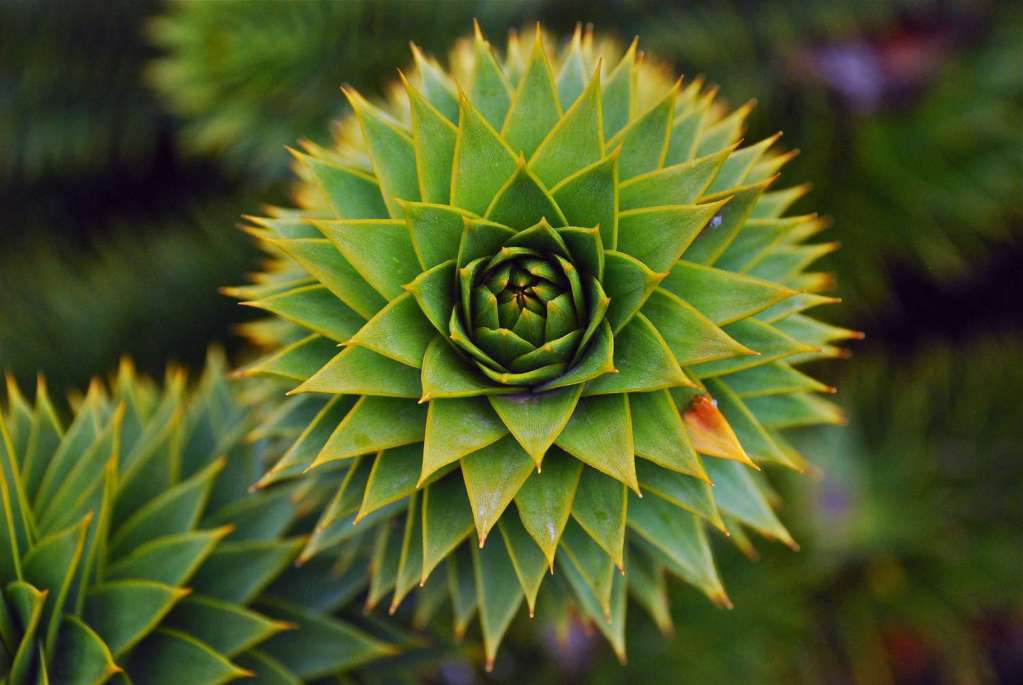
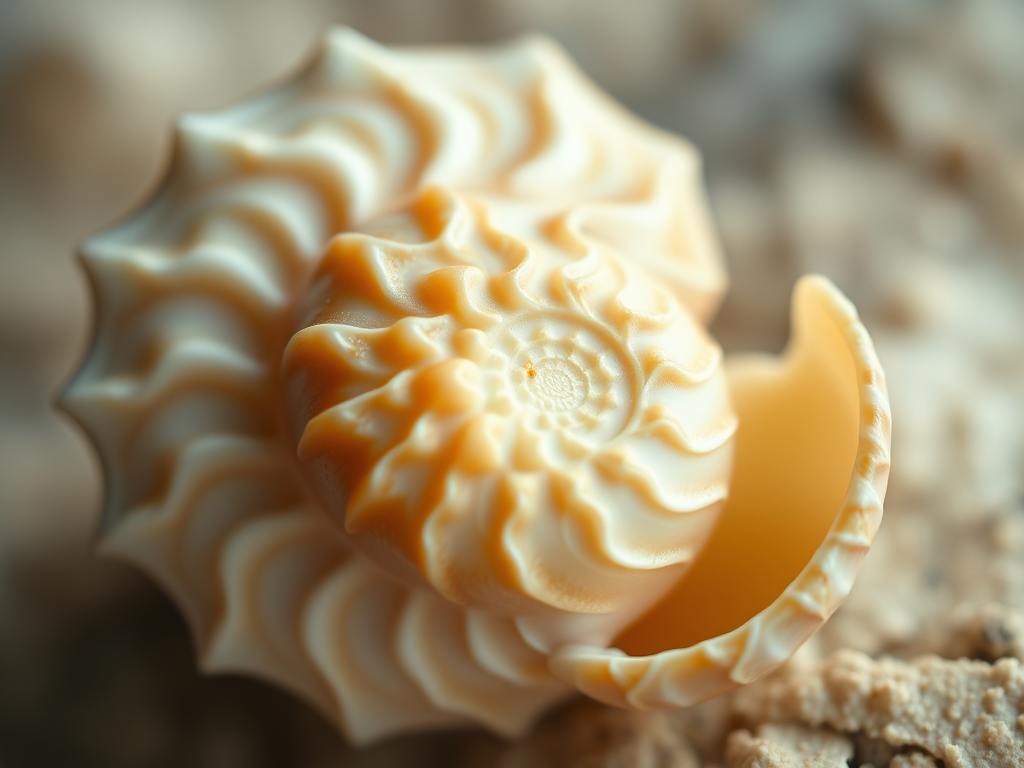
There’s a quiet possibility I keep coming back to. Not in a preachy way. Not in a “you must see it this way” way, but more of a curiosity that sits with me whenever a leaf catches light just right, or when a room feels more like sanctuary than living space. For example, when I look at the intricate order and rhythm of a fractal pattern, I get a sense of awe… and then that curious tension seeps in.
 Deeper Dive: When Nature Pulls Us Upward
The Strange Ache of Transcendence
Years ago in the high country of the Rocky Mountains, I had one of those moments that didn’t just catch my breath — it caught my soul. This was where I first noticed the subtle tension — something both out of place and just out of reach. It was beautiful… so much so that it made me feel awkward and small.
The majestic snow-capped peaks stood in authority above a translucent misty foreground just below. Closer in, beautifully asymmetrical stone cliffs rose out of the rolling foothills. The soft light that glowed out of the mist shifted softly across granite spires, accentuating the unmoving, ancient way mountains have.

As the mist rolled down from the high country and hugged the steep terrain, it then gathered along the upper cliffs, paused and then began a quiet crawl downward into the valley below. I was struck by the deference, ease, and yet determination as it made its way over and around the peaks, then poured down the cliffs and rolling slopes below in a patient, unhurried drift.
The panorama, with its divine dance of peaks, valleys, light and mist, left me awestruck, and a little perplexed with what appeared so sublime.
Watching in wonder, something in me tightened and opened at the same time. There was beauty. There was order. And there was mystery.
It wasn’t peaceful in the expected sense— it was simply too much to hold. There was the ache — almost a frustration — like my soul knew the beauty before me outmatched my capacity to absorb it. The mountains were offering a glimpse into something beyond what my senses could take in.
Somehow, I knew that what I was seeing was only the edge of a larger reality, one I could feel but not fully grasp. It was as if the veil between the earthly material realm and spiritual experience grew thin.
Thin Places
The idea of thin places comes from early Celtic Christianity, where faith was not abstract or removed from the world, but deeply embodied in landscape, rhythm and daily life. For the Celts, creation was never a barrier to God’s presence; it was one of the ways that presence became perceptible. Certain places — windswept cliffs, quiet glens, rugged coastlines — seemed to make that reality more apparent, not because God was more present there, but because people were more attentive.
“In a thin place, the physical world is not diminished, but becomes translucent.”
— Celtic Historian Esther de Waal, Every Earthly Blessing
In this way, thin places were never about escape. They didn’t pull a person out of the world. They drew them more deeply into it. The land became translucent, not replaced. The physical remained fully physical, yet carried a sense of depth that exceeded what could be seen, heard, or explained.

This paradigm quietly resists the idea that beauty or nature should be treated as ends in themselves. In the Celtic imagination, beauty functioned as a threshold — something you step through, not something you stop at. The experience of awe wasn’t meant to terminate on the mountain or the river, but to awaken the soul to a Presence that stood behind and within creation.
What’s striking is how relational this view is. Thin places weren’t defined by grandeur alone. They were often personal. A hillside, a well, a bend in the road — places that seemed to speak differently to different people. Not universally powerful, but intimately personal — and quietly inclusive.
“A thin place is where the distance between heaven and earth seems particularly slight.” — Ian Bradley, The Celtic Way
That intimacy matters. It suggests that the moments when beauty overwhelms us are not accidents or emotional glitches. They are moments when our inner posture aligns briefly with a deeper truth — when we become capable of perceiving what is always there.
Nature as an Invitation
Science tells us why our bodies respond to natural forms — fractal patterns that lower stress, full-spectrum light that stabilizes circadian rhythms, and plant presence that lowers heart rate. And I love that! It’s a thread I come back to again and again.
While science can describe the mechanism, it doesn’t seem to answer the intrinsic why. It’s often ascribed to ancient practices and inherited patterns shaped over generations. And I’m sure that’s true at some level, but something about that seems to fall short, and simply doesn’t satisfy this curious soul.
It’s worth asking:
Why are we wired to respond to natural beauty at all?
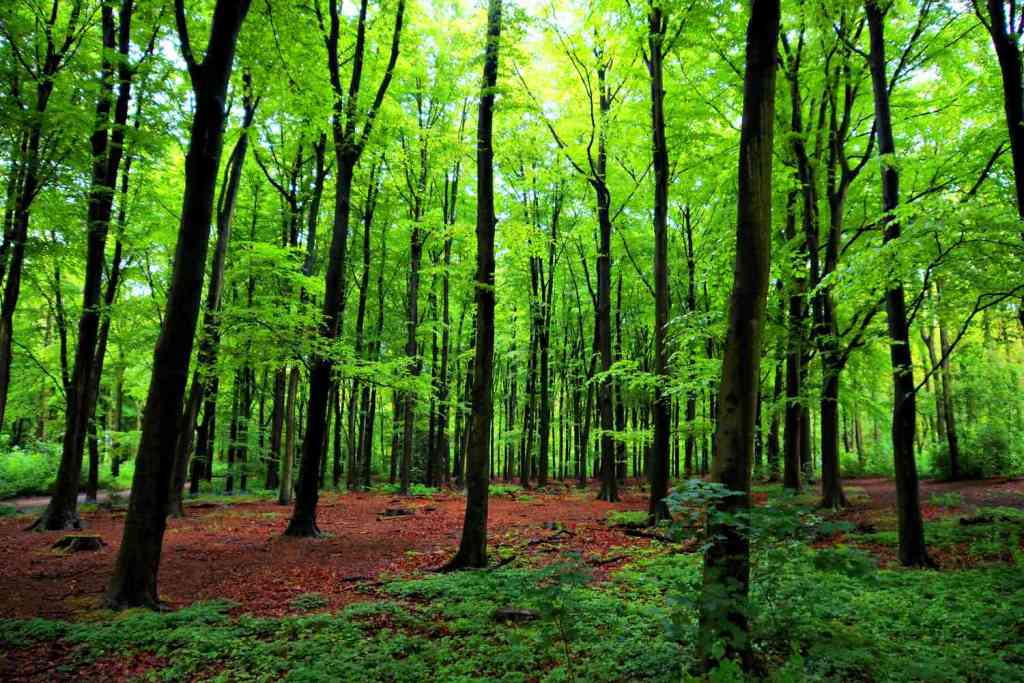
Why does a grove of trees feel like refuge?
Why does running water quiet the mind?
Why does a misty mountain view — or even a single houseplant near a window — pull something open in us?
Some say nature is the source. I’ve come to see it as the invitation — a doorway. It’s like a place where the Creator speaks through created things with order, beauty, pattern and presence. Not to replace nature’s benefits, but to deepen them.

You don’t have to share that belief to enjoy biophilic design. But if you’ve ever felt the ache — that “too much beauty for one human to hold” feeling — then you’ve brushed up against the same mystery I’m talking about.
Designing for Moments That Point Beyond
In biophilic design, we talk about textures, materials, views, greenery, light, air and water. But we also talk — sometimes without naming it — about a sense of meaning that emerges when a space feels alive. Have you ever wondered beyond the material world around us about the reason nature makes us feel more whole? Could it be that we’re responding intuitively to the One who set its rhythms in motion?
To me, that doesn’t pull away from biophilic design — it enriches it, adds dimension and gives meaning. It honors both the science and the soul.
Curiosity opens us to seek beyond the material moment for answers. As we gain a sense of calm and are soothed by a room that feels more sanctuary than space, maybe it’s because sanctuary is exactly what it was designed to hint at — a place where we feel safe with attunement and a sense of security.
A Gentle Closing Thought
Maybe that’s the real gift nature keeps giving us — not just calm or comfort, but a reminder that there’s more happening beneath the surface than we often notice. The beauty we bring indoors doesn’t have to stay at the level of décor. It can become one of those “thin place” moments, even in the most ordinary rooms, where something in us feels a little more awake and a little more connected. You don’t have to name the Source to feel that pull. But if you do, the richness only deepens — the wonder grows, the meaning expands, and the space feels more like home.
In my view, biophilic design doesn’t stop at the natural material elements. It’s about making room for the possibility that beauty might be hinting at something beyond itself — and choosing to be someone who listens.

Discover more from NaturAbode
Subscribe to get the latest posts sent to your email.

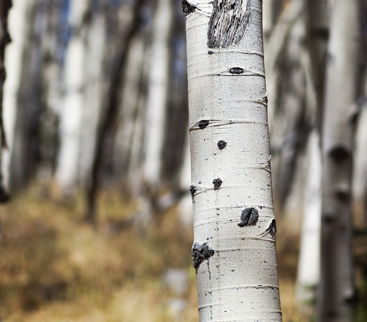
 Deeper Dive: Those Mysterious Aspen Groves