How to Transform Your Home into a Natural Retreat

When people visit our home, they almost always say roughly the same thing: “It just feels so comfortable and peaceful in here.”
It’s not just the way sunlight filters through the windows onto the rustic wood beams. It’s also how the scent of cedar lingers in the air, and the way every nook and corner seems to breathe nature’s unhurried ease. Over the years, Krista and I have shaped our space into something that doesn’t just look good, but feels alive. For us, and for you, if you want it, it’t like wakin up each day to a retreat that happens to be home. After all, when you really think about it, your home is (or should be) your safe space… your sanctuary.
We set out to intentionally make the space a place of comfort and recharge. We didn’t follow a specific design plan, and we didn’t hire a decorator. Instead, we followed our senses of what seemed right for us — and that would be the allure of natural textures, scents, soft light and materials that seem to hold an emotional connection to something familiar. The goal was never strict symmetry or perfection… in fact, quite the opposite! we created a space where the natural world isn’t just seen, but felt.
Dr. Judith Heerwagen, one of the early voices in biophilic design, says:
“…our need for nature isn’t decorative — it’s biological. Environments that echo the natural world reduce stress, boost mood, and restore focus. When a home reflects that truth, it stops being just shelter and starts feeling like sanctuary.”
 Deeper Dive: Why Nature Calms the Brain
Dr. Roger Ulrich’s Stress Recovery Theory adds another layer:
“Exposure to natural patterns and light triggers physiological recovery, lowering heart rate and blood pressure in minutes. So when your home reflects nature — in color, texture, or rhythm — you’re literally giving your nervous system permission to unclench.”
The Language of Materials

If walls could talk, those natural elements would whisper comforting, familiar tones of good memories. Wood, stone, clay, rattan — each carries a story. Our chestnut dining table, for instance, still bears decades-old memories from where our son (now grown and out of the house) firmly planted tiny ring-shaped dents into the surface with the hard plastic tip of a squeezable mustard bottle. It’s not damage; it’s history! The grain of the rustic mantle, the coolness of flagstone under bare feet, the texture of woven rugs — these are what ground us.
Terry Tempest Williams once wrote that natural materials connect us to “the geology of our own being.” When you surround yourself with things that come from the earth, the space starts to echo the quiet stability of the outdoors. It becomes a place where you can exhale.
Light, Air, and the Quiet Rhythm of the Day
One of the simplest ways to make a home feel like a retreat is to let the light in and let it move. We stopped blocking our windows with heavy curtains years ago, and the difference was immediate. Morning light now spills across the floors, shifting through the day like a living thing.
Air matters too. We keep windows open whenever possible, even in winter, just to remind the space to breathe.
“The presence of daylight and sunlight in buildings clearly affects our psychological and physiological experience of place. Its absence creates lifeless, bland, indifferent spaces that disconnect us from our biological heritage.” — Judith Heerwagen, “The Experience of Daylight”, 2011.
I’ve found that to be true: when daylight finds its way into dark corners, your mind follows.
The Living Presence of Plants
Krista likes to tease that I’ve turned the house into a jungle. She’s not wrong — there’s a fiddle-leaf fig that seems to think it owns the place. But the thing about plants is that they don’t just decorate a home, they change it. They humidify the air, filter toxins, soften acoustics, and visually calm the space.

Researcher Roger Ulrich also found that even looking at greenery can lower blood pressure. You can feel that shift when you walk through a room filled with life. It’s like your nervous system takes a step back and sighs.
Colors That Ground You
When we repainted our living room, we skipped the trendy grays and went for a tone that looked like wet stone after rain. Nature’s palette doesn’t clash or compete — it balances. Warm browns, muted greens, gentle blues — colors that don’t shout, they steady and ground.
“When everything in a room is shouting for attention, there’s nowhere for your eye to rest.” Creating those moments of visual rest, she explains, is what makes a space feel calm and balanced — a principle nature seems to understand instinctively. — Rebecca Atwood, Living with Color: Inspiration and How-Tos to Brighten Up Your Home (Ten Speed Press, 2019)
Sometimes, all it takes is repainting one wall in a color that exists outside your window to make the whole space feel more rooted.
Sound, Scent, and the Subtle Layering of Calm
A retreat engages every sense. The soft trickle from a tabletop fountain. Wind chimes that catch the smallest breeze. The faint smell of cedar or sage drifting from a diffuser.
Julian Treasure is a British sound expert, author, and international speaker best known for his TED Talks on how sound affects humans notes that natural acoustics — running water, rustling leaves, birdsong — slow our heart rate and help the body relax. He calls it “designing with the ear,” a reminder that the spaces we build also shape the way we feel through sound.

I’ve noticed it too. The quiet hum of a home like this isn’t silence — it’s a living, breathing calm. When the background is filled with gentle, organic rhythm instead of mechanical noise, your whole body tunes itself differently. Even scent joins that conversation — cedar grounding the air, citrus lifting it. Together, they create a subtle emotional landscape that says, you can let go now.
Comfort You Can Feel
If nature had an underlying or ultimate texture — the one that defines them all — it would be comfort. Think of thick wool blankets on a chilly day, linen that wrinkles softly, or a worn leather chairs that seem to mold around you. These are all textures that tell an inviting story of comfort. Even waves of light might be considered texture… with rhythm! We love that bright sunlight spilling in during the daytime. But come evening, we like to keep light warm and low — never harsh — and create small corners to rest in. A reading chair near the window. A bench by the door where you can just sit, relax and take in the stillness.

Designer Katy O’Neill once said that “a truly restorative home feels like an extension of your body.” That line stuck with me. It seems that the more we support our purpose to shape our home into a naturally human-scaled, lived in and welcoming environment, the more it supports us back.
There’s a quiet intelligence to comfort — not luxury, but hospitable, bespoke and fit for us and our guests. When everything in a room works with your senses rather than against them, the body loosens. You move differently. You breathe differently. You feel safe and… well, at home.
Blurring the Line Between Inside and Out
Our back doors stay open often. Sometimes it’s just to let in birdsong or the smell of rain. In colder months, sure, we close ’em up to keep out the chill, but we still sneak the outdoors in with a few well placed dried branches in a tall vase, and pine cones and stones from the trail. It’s a small reminder that nature doesn’t stop at the threshold.

Biophilic designer Bill Browning often says that when we connect our interiors to the landscape, “we restore our sense of belonging.” That’s the heart of it. The more we blur that boundary, the more at home we feel in both worlds.
You don’t need a wall of glass to create that connection. A small table by the window with a view of the trees will do. Or a single chair on the porch that faces the setting sun. The point is to keep that dialogue open — to remember that what’s outside is still part of you.
Closing Thoughts
A home that feels like a retreat isn’t about design trends or expensive renovations. It’s about tuning your space to the rhythms of the natural world — the textures, the colors, the air and the light.
When people walk in and say, “It just feels peaceful here,” it’s not an accident. It’s the quiet language of nature, speaking through your walls.
And when you start listening, you realize that peace was never outside to start with — it was always waiting to be invited back in.

Discover more from NaturAbode
Subscribe to get the latest posts sent to your email.

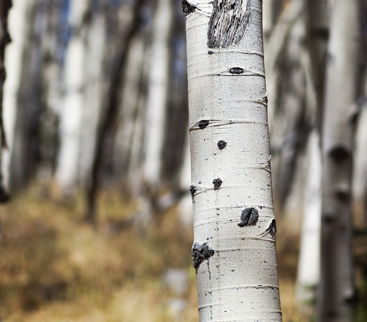
 Deeper Dive: Those Mysterious Aspen Groves